By Kevin Frank, Michigan State University
The winter of 2025-2026 once again killed turf in Michigan. This year the damage was sporadic but severe in some locations. Among the challenges associated with winterkill is diagnosing the specific cause. This year there were areas that were most likely damaged due to desiccation injury, as there was a period when snow cover was lacking, winds were blowing, and the turf was exposed. Some of these damaged areas came out of winter looking stone dead, but after about a month of growth, the areas almost completely recovered (Figure 1). We’ve seen this type of injury and recovery before, but it’s still surprising and a relief to superintendents and golfers alike.

Ice was another culprit, especially in northern Michigan where there was an extended period of ice cover for more than 30-45 days. Ice cover beyond 30 days can result in damage to annual bluegrass putting greens (Figure 2), while creeping bentgrass is unaffected.

Several annual bluegrass greens, fairways (Figure 3), and even tees were killed, and most of the damage was attributed to ice cover, as damage was apparent upon ice and snow melt and reflected surface drainage patterns.
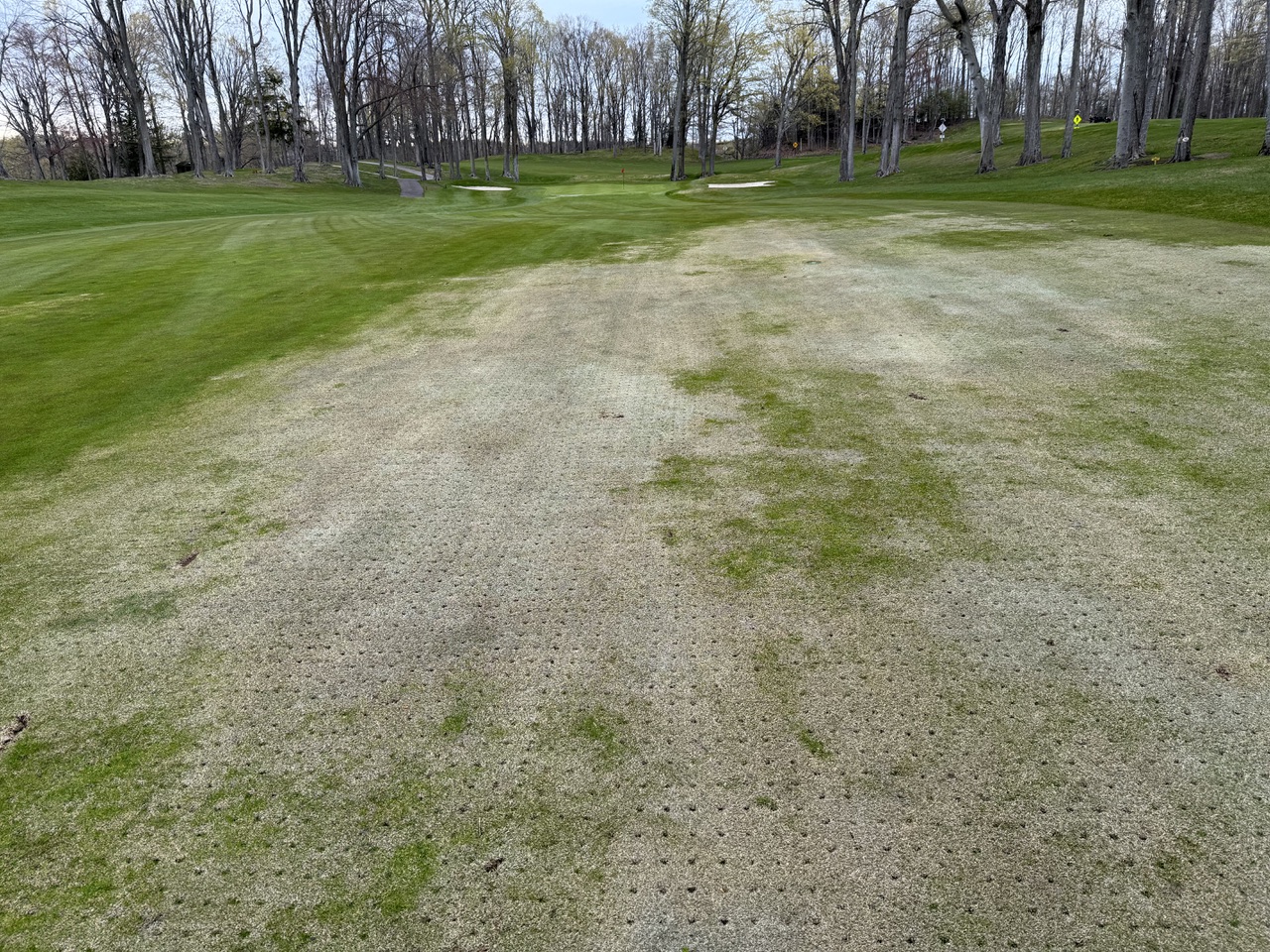
Establishment following winterkill is difficult due to cool spring temperatures that limit creeping bentgrass seed germination (Figure 4) and slow recovery from annual bluegrass that may have been damaged but not killed. The spring of 2026 was especially challenging due to cold spring temperatures that persisted through May. Multiple seedings, using covers, and judicious fertilizer applications all aid in reestablishment, but patience often wanes from both golfers and superintendents resulting some areas being sodded or plugged to hasten recovery.
